Posts Tagged ‘EECP for Elderly’

EECP Treatment for Breathlessness: A Revolutionary Approach to Managing Breathlessness in Heart Patients

Posted by

EECP Treatment for Breathlessness: Have you ever felt like you’re gasping for air after climbing just a few stairs? Or perhaps you’ve experienced that frightening sensation where your heart pounds while your lungs desperately seek oxygen during simple daily activities? You’re not alone. Millions of people worldwide struggle with breathlessness, a condition that significantly impacts quality of life and often signals underlying cardiovascular complications.Enhanced External Counterpulsation (EECP) treatment for breathlessness has emerged as a revolutionary, non-invasive therapeutic approach that’s changing lives across the globe. This groundbreaking treatment offers hope to patients who previously had limited options beyond invasive procedures or lifelong medication dependency.

Global Statistics and Long-Term Impact

The worldwide prevalence of breathlessness-related cardiovascular conditions presents a staggering healthcare challenge. According to recent cardiovascular research data:

  • 350 million people globally suffer from chronic breathlessness due to heart conditions
  • Coronary artery disease affects 18.2 million Americans annually, with breathlessness being the primary symptom
  • Heart failure impacts 64.3 million people worldwide, with dyspnea (breathlessness) occurring in 85% of cases
  • Healthcare costs related to breathlessness exceed $108 billion annually in developed nations

The long-term impact extends beyond individual suffering. Patients with chronic breathlessness experience:

  • Reduced life expectancy by 5-10 years without proper intervention
  • 40% higher risk of depression and anxiety disorders
  • Decreased work productivity affecting 60% of working adults
  • Social isolation in 75% of severe cases

These statistics underscore the critical need for effective, accessible treatment options like EECP therapy.

Understanding EECP Treatment for Breathlessness: How It Works

EECP (Enhanced External Counterpulsation) represents a revolutionary approach to treating cardiovascular-related breathlessness. This FDA-approved therapy works by using external pressure cuffs wrapped around your legs to improve blood circulation and oxygen delivery throughout your body.

During treatment, these specialized cuffs inflate and deflate in perfect synchronization with your heartbeat. When your heart relaxes between beats, the cuffs squeeze your legs, pushing oxygen-rich blood back toward your heart and vital organs. This process creates new pathways for blood flow, essentially training your cardiovascular system to work more efficiently.

The mechanism behind EECP’s effectiveness lies in its ability to:

  • Enhance collateral circulation by opening dormant blood vessels
  • Improve endothelial function through increased nitric oxide production
  • Reduce cardiac workload by improving venous return
  • Optimize oxygen utilization at the cellular level
EECP - How Does it Works ?

EECP – How Does it Works ?

Clinical Pathways and Disease Progression

Pathogenesis of Breathlessness

Breathlessness, medically termed dyspnea, results from complex interactions between multiple physiological systems. The primary pathways include:

Cardiovascular Pathway: Reduced cardiac output leads to inadequate tissue perfusion. When your heart cannot pump effectively, tissues receive insufficient oxygen, triggering compensatory mechanisms that manifest as breathlessness.

Pulmonary Pathway: While EECP primarily addresses cardiovascular causes, understanding pulmonary contributions helps identify suitable candidates. Conditions like pulmonary edema often result from cardiac dysfunction rather than primary lung disease.

Neurological Pathway: The respiratory control center in your brainstem responds to chemical signals. Elevated carbon dioxide levels or decreased oxygen saturation trigger increased respiratory drive, creating the sensation of breathlessness.

Disease Progression Without Treatment

Without appropriate intervention, cardiovascular-related breathlessness typically follows a predictable progression:

Stage 1 – Early Compensation: Mild exertional breathlessness occurs during moderate activities. Your body compensates through increased heart rate and breathing frequency.

Stage 2 – Functional Limitation: Breathlessness begins affecting daily activities. Walking distances decrease, and stair climbing becomes challenging.

Stage 3 – Rest Symptoms: Breathlessness occurs with minimal exertion or even at rest. Sleep disturbances develop due to nocturnal dyspnea.

Stage 4 – Severe Disability: Significant activity limitation occurs. Quality of life deteriorates substantially, often requiring emergency medical interventions.

EECP therapy can interrupt this progression at any stage, though earlier intervention typically yields superior outcomes.

Who Needs EECP Treatment for Breathlessness?

EECP therapy benefits a diverse range of patients experiencing cardiovascular-related breathlessness. Ideal candidates include:

Primary Indications

Coronary Artery Disease Patients: Those with blocked or narrowed arteries causing reduced blood flow to the heart muscle. These patients often experience breathlessness during physical activity due to inadequate oxygen supply to cardiac tissues.

Heart Failure Patients: Individuals with weakened heart muscles struggling to pump blood effectively. EECP helps by reducing the heart’s workload while improving overall circulation.

Angina Sufferers: Patients experiencing chest pain and associated breathlessness due to insufficient blood flow to heart muscles. EECP provides symptom relief by enhancing collateral circulation.

Secondary Indications

Post-Cardiac Surgery Patients: Those who continue experiencing breathlessness despite successful surgical interventions. EECP offers additional circulatory support during recovery.

Diabetes-Related Cardiovascular Complications: Diabetic patients often develop cardiovascular complications leading to breathlessness. EECP addresses these circulatory issues effectively.

Hypertension-Associated Symptoms: Patients with high blood pressure may experience breathlessness due to increased cardiac workload. EECP helps normalize cardiovascular function.

Contraindications

Certain conditions preclude EECP therapy:

  • Severe peripheral vascular disease
  • Active bleeding disorders
  • Uncontrolled hypertension (>180/110 mmHg)
  • Severe aortic insufficiency
  • Pregnancy

EECP vs. Alternative Treatments: Comprehensive Comparison

Treatment Aspect EECP Therapy Bypass Surgery Angioplasty Medication Only
Invasiveness Non-invasive Highly invasive Minimally invasive Non-invasive
Recovery Time None 6-12 weeks 1-2 weeks Ongoing
Success Rate 85-90% 90-95% 80-85% 60-70%
Risk of Complications <1% 5-10% 2-5% Variable
Duration of Benefits 3-5 years 10-15 years 5-10 years Temporary
Cost (USD) $8,000-12,000 $70,000-150,000 $25,000-50,000 $2,000-5,000/year
Hospital Stay Outpatient 5-7 days 1-2 days None
Return to Activities Immediate 8-12 weeks 2-3 weeks Immediate
Side Effects Minimal Significant Moderate Variable

Key Advantages of EECP

Safety Profile: EECP boasts an exceptional safety record with complications occurring in less than 1% of patients. Unlike surgical interventions, EECP carries no risk of surgical complications, infections, or anesthesia-related issues.

Quality of Life Improvement: Studies demonstrate that 85% of EECP patients report significant improvement in breathlessness symptoms within 4-6 weeks of treatment initiation.

Cost-Effectiveness: While initial treatment costs may seem substantial, EECP provides excellent long-term value by reducing hospitalization needs and medication requirements.

The EECP Treatment Process

Treatment Protocol

EECP therapy typically involves 35 one-hour sessions administered over 7 weeks. Each session follows a standardized protocol:

Pre-Treatment Assessment: Comprehensive cardiovascular evaluation including ECG monitoring and blood pressure measurement ensures patient safety and treatment optimization.

Cuff Application: Three sets of pneumatic cuffs are wrapped around your calves, thighs, and buttocks. These medical-grade cuffs connect to sophisticated monitoring equipment.

Synchronized Therapy: Computer-controlled inflation and deflation occur in perfect timing with your cardiac cycle. Patients typically experience a gentle squeezing sensation similar to a firm massage.

Continuous Monitoring: Throughout treatment, healthcare professionals monitor your vital signs, ensuring optimal pressure delivery and patient comfort.

Treatment Experience

Most patients find EECP sessions relaxing and comfortable. You can read, watch television, or simply rest during treatment. Many patients actually look forward to their daily sessions as a period of enforced relaxation.

Week 1-2: Initial adaptation period where patients adjust to the sensation and treatment schedule.

Week 3-4: Symptom improvement typically begins, with reduced breathlessness during daily activities.

Week 5-7: Significant improvement in exercise tolerance and overall quality of life becomes apparent.

Scientific Evidence and Research Data

Clinical Trial Results

The International EECP Patient Registry (IEPR) represents the largest database of EECP outcomes, including over 5,000 patients. Key findings include:

  • 74% of patients experienced a significant reduction in breathlessness symptoms
  • Exercise tolerance improved by 65% in treated patients
  • Quality of life scores increased by 58% compared to pre-treatment levels
  • Hospitalisation rates decreased by 45% in the year following treatment

Peer-Reviewed Research

A landmark study published in the Journal of the American College of Cardiology demonstrated that EECP therapy produced measurable improvements in:

  • Myocardial perfusion (blood flow to heart muscle) by 35%
  • Exercise duration increased by an average of 2.5 minutes
  • Symptom-free walking distance improved by 78%
  • Overall functional capacity was enhanced in 82% of participants

Long-Term Outcome Studies

Five-year follow-up research published in Cardiovascular Research revealed:

  • Sustained symptom relief in 68% of patients
  • Reduced cardiac event rates by 31%
  • Improved survival rates compared to medical therapy alone
  • Enhanced endothelial function persisting beyond treatment completion

Benefits Beyond Breathlessness Relief

Cardiovascular System Enhancement

EECP therapy provides comprehensive cardiovascular benefits extending beyond breathlessness relief:

Improved Heart Function: Enhanced cardiac output and efficiency reduce the heart’s workload, leading to better overall cardiovascular health.

Enhanced Blood Vessel Health: EECP stimulates the production of growth factors that promote new blood vessel formation and improve existing vessel function.

Reduced Blood Pressure: Many patients experience sustained blood pressure reductions following EECP therapy, decreasing cardiovascular risk factors.

Quality of Life Improvements

Physical Function: Patients report increased energy levels, improved exercise tolerance, and ability to participate in previously challenging activities.

Emotional Well-being: Reduced anxiety about breathlessness episodes leads to improved mental health and social engagement.

Sleep Quality: Better oxygenation and reduced nocturnal breathlessness result in more restful sleep patterns.

Integrative Approach: EECP with Lifestyle Modifications

Nutritional Optimization

Combining EECP with targeted nutritional interventions enhances treatment outcomes:

Heart-Healthy Diet: Mediterranean-style eating patterns rich in omega-3 fatty acids, antioxidants, and fiber support cardiovascular health.

Specific Nutrients: Coenzyme Q10, magnesium, and B-vitamins play crucial roles in cardiovascular function and energy metabolism.

Weight Management: Achieving optimal body weight reduces cardiac workload and improves EECP effectiveness.

Exercise Integration

Cardiac Rehabilitation: Structured exercise programs complement EECP therapy by further improving cardiovascular fitness.

Progressive Training: Gradual increase in physical activity helps maintain and enhance EECP benefits.

Monitoring Protocol: Regular assessment ensures safe progression and optimal outcomes.

Future Developments in EECP Technology

Technological Advances

Portable EECP Devices: Development of home-based EECP systems may improve accessibility and reduce treatment costs.

Enhanced Monitoring: Advanced sensors and artificial intelligence integration promise more personalized treatment protocols.

Combination Therapies: Research explores combining EECP with stem cell therapy and other regenerative approaches.

Research Frontiers

Mechanism Studies: Ongoing research continues elucidating the precise mechanisms behind EECP’s effectiveness.

Patient Selection: Advanced biomarkers may help identify patients most likely to benefit from EECP therapy.

Optimization Protocols: Personalized treatment parameters based on individual patient characteristics are under investigation.

Choosing the Right EECP Provider

Facility Requirements

Certification Standards: Ensure your EECP provider maintains proper certification and follows established protocols.

Experience Level: Choose facilities with extensive EECP experience and positive patient outcomes.

Comprehensive Care: Select providers offering integrated cardiovascular care, including nutritional counselling and lifestyle modification support.

Patient Evaluation Process

Thorough Assessment: Comprehensive cardiovascular evaluation determines EECP suitability and expected outcomes.

Realistic Expectations: Quality providers discuss expected benefits, potential limitations, and alternative options.

Follow-up Care: Ongoing monitoring and support maximize long-term benefits and detect any issues early.

Conclusion

EECP treatment for breathlessness represents a paradigm shift in cardiovascular care, offering hope to millions suffering from this debilitating condition. With its exceptional safety profile, impressive success rates, and comprehensive benefits, EECP provides an attractive alternative to invasive procedures.

The growing body of scientific evidence supports EECP’s effectiveness in reducing breathlessness, improving quality of life, and enhancing overall cardiovascular health. For patients seeking a non-invasive solution to cardiovascular-related breathlessness, EECP offers genuine hope for renewed vitality and improved well-being.

As we continue advancing our understanding of cardiovascular health and treatment options, EECP stands as a testament to the power of innovative, patient-centered care. If you’re struggling with breathlessness due to heart conditions, consult with qualified healthcare providers to determine if EECP therapy might benefit your specific situation.

❓FAQs: EECP Treatment for Breathlessness

  1. Can EECP therapy help reduce breathlessness?
    Yes. EECP enhances blood flow and oxygen delivery, which can significantly reduce breathlessness, especially in heart and lung-related conditions.

  2. How does EECP improve breathing difficulties?
    By increasing circulation and reducing the workload on the heart, EECP helps the lungs receive more oxygenated blood, making breathing easier.

  3. Is EECP effective for heart failure-related breathlessness?
    Absolutely. EECP is clinically proven to reduce dyspnea in patients with congestive heart failure and low LVEF.

  4. Can EECP be used for breathlessness in COPD or asthma?
    Yes, EECP can support better oxygenation and circulation, indirectly helping patients with COPD or asthma manage breathlessness.

  5. How long does it take for EECP to show results for breathlessness?
    Patients often experience relief within 10–15 sessions, but a full course of 35 sessions is typically recommended for sustained benefits.

  6. Is EECP a safe option for elderly patients with breathlessness?
    Yes. EECP is non-invasive and safe for senior citizens, especially those with cardiac or circulatory issues.

  7. Does EECP improve exercise capacity in breathless patients?
    Yes. By improving blood flow and oxygen delivery, EECP enhances stamina and reduces exertional breathlessness.

  8. Can EECP reduce dependency on oxygen therapy?
    In some cases, yes. Improved circulation can enhance oxygen saturation, reducing the need for external oxygen support.

  9. Are there side effects of EECP for breathlessness?
    EECP is generally safe. Some may experience mild leg discomfort initially, which usually subsides.

  10. Where can I get EECP treatment for breathlessness in India?
    Visit NexIn Health, India’s leading integrated wellness center for non-surgical therapies.
    🌐 www.nexinhealth.in | 📞 +91 9310145010 | 📧 care@nexinhealth.in

About the Author

Mr. Vivek Singh Sengar is a distinguished clinical nutritionist and researcher with specialized expertise in EECP therapy and clinical nutrition. As an expert in treating patients with lifestyle disorders, he has successfully treated over 25,000 heart and diabetes patients across the globe.

Mr. Sengar serves as the Founder of FIT MY HEART and works as a Consultant at NEXIN HEALTH and MD CITY Hospital Noida. His extensive experience in cardiovascular care and innovative non-surgical treatment approaches makes him a leading authority in integrated EECP therapy applications combined with holistic healing methods.

His practice focuses on providing comprehensive alternatives to traditional cardiac interventions, helping patients achieve optimal cardiovascular health through evidence-based non-surgical treatments combined with lifestyle optimization and natural healing approaches.

For more information about integrated non-surgical cardiac treatments and comprehensive cardiovascular health services, visit www.viveksengar.in.

💬 Need Expert Guidance for Your Health?

🌿 NexIn Health is India’s Leading Integrated Wellness Center, specializing in:

  • Non-Surgical Heart Disease Treatments

  • Diabetes Reversal Programs

  • Pain Management

  • Obesity & Fatty Liver Management

  • Women’s Hormonal Health (PCOS, Menopause, etc.)

With a team of 25+ wellness coaches, doctors, clinical nutritionists, and researchers, and over 30 centers globally, NexIn Health combines modern science with natural, non-invasive healing methods — empowering patients to reclaim their health without surgery or lifelong medications.


🔗 Visit NexIn Health: www.nexinhealth.in
📞 Call or WhatsApp: +91 9310 14 5010
📩 Email: care@nexinhealth.in


✅ Whether you’re seeking a second opinion or want to reverse your health condition naturally — take the first step towards healing today.
Your health transformation begins with the right expert.
Connect Now. Live Better.

Also Read:

Ayurvedic Heart Blockage Treatment

EECP Treatment in Hindi

Revolutionary Non-Surgical Heart Treatment


References:

  1. Arora RR, et al. The multicenter study of enhanced external counterpulsation (MUST-EECP): effect of EECP on exercise-induced myocardial ischemia and anginal episodes. Journal of the American College of Cardiology. 1999;33(7):1833-40.
  2. Michaels AD, et al. Left ventricular systolic unloading and augmentation of intracoronary pressure and Doppler flow during enhanced external counterpulsation. Circulation. 2002;106(10):1237-42.
  3. Bondesson SM, et al. Enhanced external counterpulsation in patients with refractory angina: long-term clinical follow-up. Clinical Cardiology. 2010;33(11):705-12.
  4. International EECP Patient Registry Investigators. The International EECP Patient Registry (IEPR): design, methods, baseline characteristics, and acute results. Clinical Cardiology. 2001;24(6):435-42.
  5. Levenson J, et al. Enhanced external counterpulsation for refractory angina pectoris. Heart. 2007;93(9):1123-8.
EECP Therapy for Heart Failure: A Revolutionary Non-Invasive Treatment Option

Posted by

EECP Therapy for Heart Failure: Heart failure affects millions worldwide, causing significant suffering and economic burden. Among the various treatment options available today, Enhanced External Counterpulsation (EECP) therapy for heart failure has emerged as a promising non-invasive approach, particularly for patients with ischemic heart failure. This blog explores the science behind EECP therapy for heart failure, its effectiveness, ideal candidates, and what patients can expect from this treatment.

Understanding Heart Failure

Heart failure occurs when the heart cannot pump enough blood to meet the body’s needs. Despite its name, heart failure doesn’t mean the heart has stopped working—rather, it means the heart isn’t working as efficiently as it should. This serious condition affects approximately 6.2 million adults in the United States alone.

Types of Heart Failure

Heart failure can be categorized based on which side of the heart is affected:

Left-sided heart failure: The most common type, occurs when the left ventricle cannot pump blood effectively

Right-sided heart failure: Often results from left-sided failure, occurs when the right ventricle cannot effectively pump blood to the lungs

Biventricular heart failure: Affects both sides of the heart

Heart failure can also be classified based on ejection fraction (EF)—the percentage of blood pumped out with each contraction:

Heart failure with reduced ejection fraction (HFrEF): EF less than 40%

Heart failure with preserved ejection fraction (HFpEF): EF greater than or equal to 50%

Heart failure with mid-range ejection fraction: EF between 40-49%

Causes of Heart Failure

The primary causes of heart failure include:

  • Coronary artery disease (CAD): According to research, CAD is responsible for approximately 48.3% of heart failure cases in China and remains a leading cause worldwide
  • Hypertension
  • Valvular heart disease
  • Cardiomyopathy
  • Congenital heart defects
  • Arrhythmias
  • Diabetes
  • Alcohol or drug abuse

Symptoms of Heart Failure

Common symptoms include:

  • Shortness of breath during activity or when lying down
  • Fatigue and weakness
  • Swelling in the legs, ankles, and feet
  • Rapid or irregular heartbeat
  • Reduced ability to exercise
  • Persistent cough or wheezing
  • Increased need to urinate, especially at night
  • Sudden weight gain from fluid retention

Conventional Treatments for Heart Failure

Before diving into EECP therapy for heart failure, let’s review the conventional treatment approaches:

Medications

Standard medications for heart failure include:

  • ACE inhibitors or ARBs to widen blood vessels
  • Beta-blockers to slow heart rate and reduce blood pressure
  • Diuretics to reduce fluid buildup
  • Aldosterone antagonists to help the body eliminate salt and water
  • SGLT2 inhibitors, which have shown remarkable benefits in recent years
  • Angiotensin receptor-neprilysin inhibitors (ARNIs)
  • Digoxin to strengthen heart contractions
  • Anticoagulants to prevent blood clots

Devices and Surgical Interventions

When medications aren’t enough, doctors may recommend:

  • Implantable cardioverter-defibrillators (ICDs)
  • Cardiac resynchronization therapy (CRT)
  • Left ventricular assist devices (LVADs)
  • Heart valve repair or replacement
  • Coronary bypass surgery
  • Heart transplantation

Despite these options, many patients continue to experience symptoms or may not be eligible for invasive procedures. This is where EECP therapy for heart failure comes into the picture.

What is EECP Therapy for Heart Failure?

Enhanced External Counterpulsation (EECP) is a non-invasive treatment that uses carefully timed compression of the lower extremities to increase blood flow to the heart. The therapy involves wrapping pressure cuffs around the patient’s calves, thighs, and buttocks. These cuffs inflate and deflate in sync with the patient’s heartbeat:

  • During diastole (when the heart is relaxing): The cuffs inflate sequentially from the calves upward
  • During systole (when the heart is contracting): The cuffs rapidly deflate

This sequential compression creates a “counterpulsation” effect that:

  1. Increases blood flow to the coronary arteries during diastole
  2. Decreases cardiac afterload during systole
  3. Enhances venous return to the heart

A standard course of EECP therapy for heart failure typically consists of 35 one-hour sessions, usually administered 5 days a week for 7 weeks.

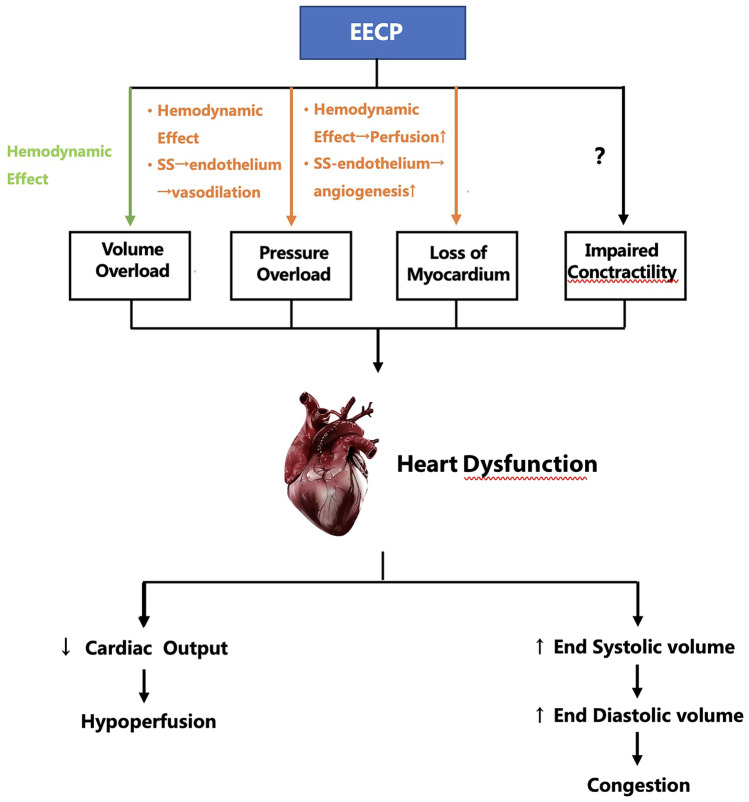
The Potential Mechanisms by Which EECP Improves Heart Function:

At this stage, the effects of EECP are primarily categorized into immediate hemodynamic changes and long-term anti-ischemic benefits driven by shear stress, though other potential mechanisms remain to be explored.

Fig. 1


The potential mechanisms by which EECP improves heart failure. EECP, enhanced external counterpulsation; SS, shear stress; green arrow: may be harmful; orange arrow: helpful

EECP Therapy for Heart Failure: The Science of Working

The research paper provides valuable insights into the mechanisms by which EECP therapy improves heart failure:

Immediate Hemodynamic Effects

  • Increased coronary perfusion: EECP therapy increases diastolic blood pressure by 26-157%, significantly improving blood flow to the heart muscle
  • Reduced cardiac afterload: Synchronous release of all cuffs during systole can reduce systolic blood pressure by 9-16 mmHg
  • Decreased left ventricular energy consumption: Studies using pulse wave analysis technology found reduced myocardial oxygen demand after EECP treatment

Long-term Effects Mediated by Shear Stress

EECP therapy for heart failure creates beneficial shear stress on blood vessel walls, which leads to:

Improved endothelial function:

  • Increased production of nitric oxide (NO) and other vasodilators
  • Decreased production of endothelin-1 (ET-1) and other vasoconstrictors
  • Enhanced endothelial cell-dependent vasodilation

Angiogenesis (formation of new blood vessels):

  • Upregulation of vascular endothelial growth factor (VEGF)
  • Increased angiopoietin production
  • Enhanced proliferation and differentiation of endothelial progenitor cells

Anti-inflammatory and anti-atherosclerotic effects:

  • Regulation of inflammatory factors
  • Reduction in oxidative stress
  • Stabilization of atherosclerotic plaques

Potential direct effects on cardiac contractility:

  • Increased plasma adrenomedullin (ADM) levels
  • Possible improvements in mitochondrial function
  • Potential effects on calcium ion currents in ventricular myocytes

These mechanisms collectively contribute to improved myocardial perfusion, reduced cardiac workload, and enhanced heart function.

Clinical Evidence for EECP Therapy in Heart Failure

Multiple studies have demonstrated the benefits of EECP therapy for heart failure patients:

The PEECH Study

This randomized controlled trial included 130 patients with ischemic heart failure (NYHA class II-III) and found:

  • Significant improvements in NYHA classification
  • Enhanced quality of life
  • Increased total exercise time
  • Higher peak oxygen uptake (VO₂peak) one week after treatment

Effects on Performance Status

Studies consistently show that EECP therapy for heart failure improves:

  • Exercise capacity (total exercise time)
  • 6-minute walk test performance
  • NYHA functional classification

Effects on Cardiac Function

Systolic Function

Results on left ventricular ejection fraction (LVEF) are mixed:

  • Some studies show no significant improvement
  • Others demonstrate marked improvement, especially in patients with baseline LVEF <40%
  • Global longitudinal strain (GLS) measurements show promising improvements

Diastolic Function

Studies consistently show improvements in diastolic function markers:

  • Enhanced E/A ratio (0.92 ± 0.41 vs. 1.08 ± 0.46, P<0.05)
  • Improved E/Ea ratio (12.61 ± 4.22 vs. 15.44 ± 6.96, P<0.05)
  • Better peak filling rate (PFR)

The E/A ratio is a measurement used to assess cardiac diastolic function (how well the heart fills with blood between contractions), which I mentioned in the “Effects on Cardiac Function” section of the blog post.

The E/A ratio is an echocardiographic measurement derived from Doppler imaging that evaluates how blood flows through the mitral valve between the left atrium and left ventricle during diastole (the filling phase of the cardiac cycle). It consists of two components:

  1. E wave (Early diastolic filling): Represents passive filling of the ventricle when the mitral valve first opens. This is the first and usually larger peak on the Doppler waveform.
  2. A wave (Atrial contraction): Represents the additional blood flow into the ventricle caused by atrial contraction (the “atrial kick”). This is the second peak on the Doppler waveform.

The E/A ratio is calculated by dividing the peak E wave velocity by the peak A wave velocity.

From the Research it has been  found that, patients who received EECP therapy showed an improvement in their E/A ratio from 0.92 ± 0.41 to 1.08 ± 0.46 (P < 0.05), indicating enhanced diastolic function after treatment.

A normal E/A ratio typically ranges from about 0.8 to 2.0, depending on age. In heart failure with diastolic dysfunction, this ratio is often abnormal:

  • In early/mild diastolic dysfunction: The ratio may be reduced (<0.8)
  • In moderate diastolic dysfunction: The ratio may appear pseudonormal (normal-looking but with other abnormal parameters)
  • In severe diastolic dysfunction: The ratio may be elevated (>2.0), known as a “restrictive filling pattern”

The improvement in E/A ratio after EECP therapy suggests that this treatment helps the heart fill more efficiently during diastole, which is particularly important for heart failure patients.

Effects on Prognosis

EECP therapy for heart failure appears to improve short-term outcomes:

  • Reduced 90-day readmission rates (6.1% vs. predicted 34%)
  • 78% reduction in emergency room visits over 6 months
  • 73% reduction in hospitalizations over 6 months

Ideal Candidates for EECP Therapy for Heart Failure

Based on clinical studies and guidelines, the following patients may benefit most from EECP therapy:

Recommended Candidates:

  • Patients with stable ischemic heart failure (NYHA class II-III)
  • Individuals with angina symptoms combined with heart failure
  • Heart failure patients with coronary artery disease as the primary cause
  • Patients who have exhausted standard medical therapies
  • Individuals who are not candidates for invasive procedures
  • Elderly patients (studies show particularly good results in those over 65)
  • Patients seeking to improve exercise tolerance and quality of life

Comparing EECP Therapy with Surgical Options and ICDs

When considering treatments to improve heart function, patients and clinicians have several options. Here’s how EECP therapy for heart failure compares to surgical interventions and implantable devices:

Aspect EECP Therapy for Heart Failure Heart Surgery (CABG/Valve) ICD/CRT Devices
Invasiveness Non-invasive, external Highly invasive Minimally invasive
Anesthesia None required General anesthesia Local anesthesia
Hospital stay Outpatient procedure 5-7 days 1-2 days
Recovery time None, resume normal activities 6-12 weeks 1-2 weeks
Treatment duration 35 one-hour sessions over 7 weeks One-time procedure One-time implantation
Mechanism Increases coronary perfusion, reduces afterload Direct revascularization or valve repair Corrects rhythm or synchronizes contractions
Effect on survival Limited data on long-term survival Improved survival in selected patients Improved survival in appropriate candidates
Effect on symptoms Significant symptom improvement Variable symptom improvement Variable symptom improvement
Exercise capacity Consistently improved Variable improvement Variable improvement
Risk of serious complications Very low Moderate to high Low to moderate
Retreatment possibility Can be repeated as needed Redo surgery is high risk Battery replacement needed every 5-10 years
Cost Moderate Very high High
Insurance coverage Variable Generally covered Generally covered

Contraindications: Who Should Not Receive EECP Therapy for Heart Failure

Although EECP therapy for heart failure is generally safe, it’s not appropriate for everyone. Contraindications include:

Absolute Contraindications:

  • Acute heart failure decompensation
  • Severe aortic insufficiency (regurgitation)
  • Acute deep vein thrombosis (DVT)
  • Severe peripheral arterial disease with ulcers
  • Pregnancy
  • Arrhythmias that interfere with ECG triggering
  • Coagulopathy with active bleeding

Relative Contraindications:

  • Hypertension uncontrolled by medication (>180/110 mmHg)
  • Recent cardiac catheterization or arterial puncture (<2 weeks)
  • Severe chronic obstructive pulmonary disease
  • Abdominal aortic aneurysm >4 cm
  • Moderate to severe aortic stenosis
  • Recent stroke (<3 months)
  • Heart rate >120 beats per minute

What to Expect During EECP Therapy for Heart Failure

For patients considering EECP therapy, here’s a guide to the treatment experience:

Before Treatment:

  1. Comprehensive evaluation: Medical history review, physical examination, and possibly cardiac tests
  2. Treatment planning: Discussion of the number of sessions needed (typically 35)
  3. Insurance verification: Checking coverage for the procedure

During Treatment:

Preparation:

  1. The patient lies on a comfortable treatment table
  2. ECG electrodes are attached to monitor heart rhythm
  3. Blood pressure cuff is placed on one arm
  4. Pressure cuffs are wrapped around calves, thighs, and buttocks

The procedure:

  1. Each session lasts approximately one hour
  2. The cuffs inflate and deflate in sync with the heartbeat
  3. Patients may feel pressure similar to a tight hug on their legs
  4. Most patients find the treatment comfortable enough to read, watch TV, or even nap

Monitoring:

  1. Heart rhythm and blood pressure are continuously monitored
  2. Healthcare providers check for any discomfort or side effects

After Treatment:

Immediate effects:

  1. Most patients can resume normal activities immediately
  2. Some may experience mild fatigue or muscle soreness

Follow-up care:

  1. Regular assessments throughout the course of therapy
  2. Evaluation of symptoms and functional capacity
  3. Adjustment of medications as needed

Potential side effects:

  1. Minor discomfort like skin irritation or bruising
  2. Muscle or joint soreness
  3. Rarely, dizziness or fatigue

Expected Outcomes:

Based on clinical studies, patients may experience:

  • Noticeable improvement in symptoms after 15-20 sessions
  • Reduced shortness of breath
  • Increased exercise tolerance
  • Better quality of life
  • Decreased need for nitrate medications (if used for angina)
  • Reduction in emergency room visits and hospitalizations

The Future of EECP Therapy for Heart Failure

As research continues, several exciting developments are on the horizon:

  1. Personalized treatment protocols: Tailoring the number and frequency of sessions to individual patient needs
  2. Combination therapies: Integrating EECP with other treatments for synergistic effects
  3. Improved devices: More comfortable, efficient, and portable EECP machines
  4. Expanded indications: Potential use in other cardiovascular conditions
  5. Long-term efficacy data: More research on the durability of benefits

Conclusion

EECP therapy for heart failure represents a valuable non-invasive option for patients with ischemic heart failure, particularly those who have exhausted conventional treatments or are not candidates for invasive procedures. The therapy’s ability to improve myocardial perfusion, reduce cardiac workload, and enhance both systolic and diastolic function makes it a promising addition to the heart failure treatment arsenal.

Clinical evidence demonstrates that EECP therapy for heart failure can significantly improve functional capacity, quality of life, and short-term outcomes like hospitalizations. While more research is needed—especially regarding long-term benefits and direct effects on cardiac contractility—the existing data supports EECP therapy for heart failure as a safe and effective treatment option.

For heart failure patients seeking symptom relief and improved quality of life, EECP therapy for heart failure deserves consideration as part of a comprehensive treatment plan. As with any medical treatment, patients should consult with their cardiologists to determine if EECP therapy for heart failure is appropriate for their specific condition.

Meet Vivek Singh Sengar – EECP Expert & Founder of Fit My Heart

Vivek Singh Sengar is a renowned Clinical Nutritionist and EECP Therapy Specialist, with over 11 years of experience in reversing heart failure and coronary blockages through non-invasive, drug-free treatments. As the Founder of Fit My Heart, he has helped thousands of patients avoid bypass surgery and improve their heart function using personalized EECP therapy and lifestyle protocols.


✅ Struggling with Heart Failure?

You Deserve a Second Opinion – Without Surgery or Stents

🔹 Book a FREE 15-minute consultation with Vivek Singh Sengar
🔹 Understand if EECP Therapy is right for your heart condition
🔹 Get a personalized, non-surgical treatment plan

👉 Book Your Free Consultation Now
Take the first step toward a stronger heart – naturally.

Frequently Asked Questions About EECP Therapy for Heart Failure

Que: What exactly is EECP therapy for heart failure?

Ans: EECP is a non-invasive treatment that uses inflatable cuffs on the legs to increase blood flow to the heart and improve cardiac function by synchronizing compression with the patient’s heartbeat.

Que: How long does a complete course of EECP therapy take?

Ans: A standard course consists of 35 one-hour sessions, typically administered 5 days a week for 7 weeks.

Que: Is EECP therapy painful?

Ans: No, it’s not painful. Most patients describe a sensation of pressure similar to a tight hug on their legs, and many find it comfortable enough to read or nap during treatment.

Que: How soon might I notice improvements with EECP therapy for heart failure?

Ans: Many patients report noticeable symptom improvement after 15-20 sessions, though individual responses vary.

Que: Is EECP therapy covered by insurance?

Ans: In USA Coverage varies by provider. EECP is covered by Medicare and many insurance plans for specific indications, but verification is recommended before starting treatment. In INDIA, insurance companies usually do not cover EECP Treatment, but It purely depends upon the patient and doctor. Usually, a patient is required to talk to his doctor and insurance company. It has been seen that many patients get the reimbursement after submitting all the valid documents and consistent follow-up with the insurance company and the doctor.

Que: Can EECP therapy replace medications for heart failure?

Ans: No, EECP is typically used as a complementary treatment alongside standard medications, not as a replacement but in most of the cases the need for medicines is reduced post EECP therapy.

Que: Are the effects of EECP therapy permanent?

Ans: Benefits typically last 3-5 years, after which some patients may require repeat courses of therapy or booster doze can be taken to maintain the effect of EECP Therapy.

Que: Can I have EECP therapy if I have an ICD or pacemaker?

Ans: Yes, having a pacemaker or ICD is not a contraindication for EECP therapy.

Que: What side effects might occur with EECP therapy?

Ans: Common side effects are mild and include skin irritation, muscle soreness, or fatigue. Serious side effects are rare.

Que: How does EECP therapy differ from cardiac rehabilitation?

Ans: While cardiac rehab focuses on exercise and lifestyle changes, EECP is a passive treatment that mechanically improves blood flow without requiring physical exertion.

Que: Can EECP therapy help if I’m waiting for a heart transplant?

Ans: Yes, EECP may be used as a “bridge therapy” to improve quality of life and function while waiting for transplantation, in most cases EECP Therapy may avoid the need  for the Heart Transplantation.

Que: Is there an age limit for EECP therapy?

Ans: There’s no specific age limit, and studies show elderly patients (over 65) often respond particularly well to treatment.

Que: Can EECP therapy reduce my need for heart medications?

Ans: Most of the patients require fewer medications after EECP therapy, but any changes should only be made under physician supervision.

Que: How is success of EECP therapy measured?

Ans: Success is measured through improved symptoms, exercise capacity, quality of life, echocardiographic parameters, and reduced hospitalizations.

Que: Can I resume normal activities while undergoing EECP therapy?

Ans: Yes, most patients can maintain their normal daily activities during the treatment period with no restrictions.

Enhanced External Counterpulsation: 3 Unique Benefits of EECP

Posted by

Enhanced External Counterpulsation: What is EECP?

  • EECP (Enhanced External Counterpulsation) is a non-invasive circulatory support technique.

  • It uses inflatable cuffs (like blood pressure cuffs) placed on the legs and buttocks.

  • The cuffs inflate and deflate in sync with the heartbeat, improving blood flow to the heart, brain, and other vital organs.

  • It enhances circulation by increasing venous return and diastolic aortic pressure, which improves myocardial function.


How Does Enhanced External Counterpulsation (EECP) Work?

  • Sequential inflation of the cuffs squeezes blood from the legs toward the heart.

  • The inflation occurs during the heart’s resting phase (diastole) to boost blood supply.

  • It helps open smaller blood vessels, reduces inflammation, and supports vessel repair.

  • Benefits include:

    • Increased blood flow to vital organs (heart, brain, kidneys)

    • Improved heart function and reduced stress

    • Support for brain recovery after stroke

    • Better blood sugar control in diabetics


Who Can Benefit from Enhanced External Counterpulsation EECP?

EECP is especially helpful for patients with the following conditions:

  • Cardiovascular Issues:

    • Angina (chest pain)

    • Heart failure

    • Past heart attacks

  • Neurological Disorders:

    • Ischemic stroke

    • Parkinson’s disease

    • Alzheimer’s disease

  • Metabolic and Other Conditions:

    • Type 2 diabetes (and its complications)

    • Eye diseases due to poor blood flow

    • Sleep disorders

    • Erectile dysfunction

    • Sudden hearing loss

    • Depression or anxiety due to chronic illness

Also Read: EECP Treatment for Old Age Patients


Who Should Not Receive EECP? (Contraindications)

  • Blood clots in the legs

  • Severe heart valve problems (e.g., severe aortic regurgitation)

  • Uncontrolled high blood pressure

  • Irregular heartbeat not well-managed

  • Open wounds or skin infections on the legs

  • High lung pressure


How is EECP Administered?

  • Standard Protocol:

    • 1 hour/day, 5–6 days/week for 6–7 weeks (total of 35–36 hours)

  • Cuffs are placed on:

    • Calves

    • Thighs

    • Buttocks

  • Monitoring includes:

    • Blood pressure

    • Heart rate and rhythm

    • Oxygen saturation

    • Skin condition

  • Adjustments:

    • Based on patient comfort and response

    • Treatment stopped if oxygen drops or pain occurs


How to Prepare for EECP

  • Keep stomach empty for at least 2–3 hours before the session

  • Empty your bladder for comfort before starting

  • Take prescribed medications as advised by your doctor

  • Wear loose, comfortable clothing; avoid tight undergarments

  • Avoid caffeine or heavy meals right before treatment

  • Stay relaxed and calm; deep breathing may help

  • Avoid using mobile phones or talking during the session

  • Inform staff if you feel discomfort, pain, dizziness, or shortness of breath

  • Remove jewelry or objects around waist and thighs

  • Bring water and a light snack for after the session if needed


Safety and Monitoring

  • Patients should be screened before starting EECP.

  • Ongoing monitoring during sessions is essential.

  • Doctors adjust cuff pressure and timing as needed.

  • EECP is generally safe and well-tolerated with proper care.


Treatment Maintenance and Follow-up

  • Shorter sessions can be used for less fit or frail patients.

  • Booster treatments can be repeated yearly.

  • Maintenance therapy may include 2–3 hours/week after initial cycle.


Benefits of EECP

  • Reduces chest pain and improves exercise tolerance

  • Enhances heart and brain function

  • Supports recovery after heart procedures or stroke

  • Improves quality of life in elderly patients

  • Helps manage:

    • Sleep and mood disorders

    • Blood sugar in diabetics

    • Vision and hearing loss

    • Sexual dysfunction


Conclusion

EECP is a safe, non-invasive, and effective treatment option for elderly individuals with cardiovascular, neurological, and metabolic conditions. It is especially valuable for those who are not good candidates for surgery or strong medications. With proper screening, individualized protocols, and professional monitoring, EECP significantly improves symptoms, functionality, and overall quality of life.

About Mr. Vivek Singh Sengar

Mr. Vivek Singh Sengar is a highly respected EECP (Enhanced External Counterpulsation) expert with over 13 years of clinical experience in the field of non-invasive cardiology and integrative care. As the Founder of FIT MY HEART, he has dedicated his career to providing advanced EECP therapy to patients suffering from chronic heart conditions such as heart failure, angina, low ejection fraction, post-heart attack recovery, and coronary blockages.

Trained in Clinical Nutrition and Integrative Cardiac Rehabilitation, Mr. Sengar blends modern science with lifestyle medicine to deliver holistic, drug-free heart care. He has treated thousands of patients who were either ineligible for bypass or angioplasty, helping them regain functional capacity, improve heart pumping, and reverse symptoms—often without surgery.

His approach combines EECP with chrono-nutrition, therapeutic fasting, herbal support, Panchakarma, and patient education to address root causes rather than just symptoms. Mr. Sengar is also the creator of India’s first 60-hour EECP training program for healthcare professionals and is widely regarded as a pioneer in the expansion of EECP in India for both cardiac and non-cardiac applications.

With a deep passion for preventive healthcare, Mr. Vivek Singh Sengar continues to inspire trust, transformation, and long-term wellness in patients across the country.

EECP Treatment for Old Age Patients: A Non Invasive, Safe & Risk Free Solution for Heart, Brain and Circulation Disorder

Posted by

EECP Treatment for Old Age Patients: Are you an older adult experiencing heart-related issues, feeling low on energy, or finding daily activities becoming a struggle? What if there was a gentle, non-surgical way to improve your heart health, boost circulation, and enhance your overall quality of life? This is where EECP Treatment for Old Age Patients comes into the picture, offering a ray of hope for a healthier and more active life in your golden years.

As someone dedicated to the well-being of my clients in India through innovative therapies like EECP Treatment, I, Vivek Sengar, have seen firsthand the remarkable benefits this approach can offer to older adults. This blog post aims to be your comprehensive guide to understanding EECP Treatment for Old Age Patients, its safety, effectiveness, and how it can address various health concerns common in later life. Let’s delve into how EECP Treatment can be a game-changer for your health and vitality.

What is EECP? A Non-Surgical Treatment for Older Adults

(more…)