
Can Dehydration Trigger Chest Pain or Angina: Best Medical Explanation
Can Dehydration Trigger Chest Pain or Angina? This is a question many people ask when they feel a sudden tightness in their chest on a hot day. While we often associate chest pain with serious heart disease, the role of water intake is frequently overlooked. Dehydration is not just about being thirsty; it is a physiological state that changes how your heart functions.
When you do not drink enough water, your total blood volume drops. This makes your blood thicker and harder to move. For a healthy person, this might cause mild discomfort, but for those with heart disease or diabetes, it can be dangerous. Understanding can dehydration trigger chest pain or angina helps you take proactive steps to protect your cardiovascular system from unnecessary strain.
Quick Fact Sheet: Surprising Truths About Hydration and Your Heart
-
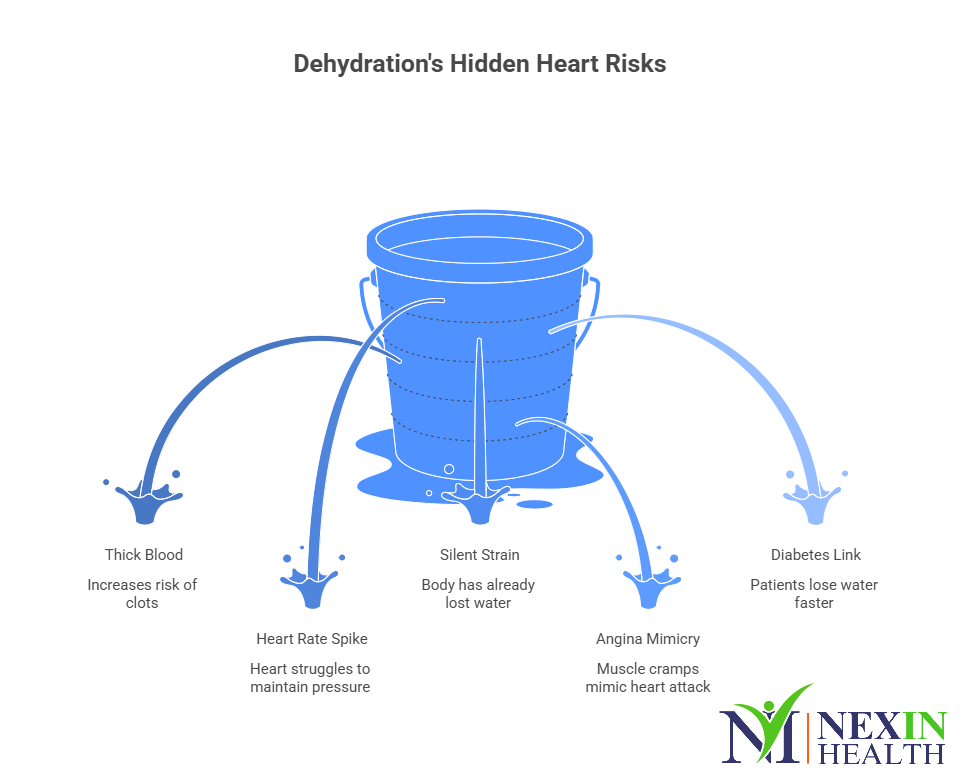
The “Thick Blood” Effect: Dehydration can make your blood as much as 8-10% thicker, significantly increasing the risk of small clots.
-
Heart Rate Spike: Even mild dehydration can increase your resting heart rate by 10 to 15 beats per minute as your heart struggles to maintain pressure.
-
Silent Strain: By the time you feel “thirsty,” your body has already lost about 1% to 2% of its total water content, which is enough to impact blood circulation.
-
Angina Mimicry: Dehydration-induced muscle cramps in the chest wall (intercostal muscles) can perfectly mimic the sensation of a heart attack.
-
The Diabetes Link: Patients with high blood sugar lose water faster through urination, making them 3x more likely to experience chest pain due to dehydration.
Can Dehydration Trigger Chest Pain or Angina: The Biological Link
To answer the question, can dehydration trigger chest pain or angina, we must look at dehydration and blood circulation. Your blood is roughly 90% water. When you are dehydrated, your blood volume decreases. This leads to a condition called “hemoconcentration,” where the blood becomes viscous.
For the heart, pumping “thick blood” is like trying to push honey through a straw instead of water. This creates massive dehydration effects on heart health. If you already have narrowed arteries (atherosclerosis), this thick blood cannot flow easily. This lack of oxygen-rich blood reaching the heart muscle results in chest pain due to dehydration or a formal angina attack.
How Does Dehydration and Heart Health Connect?
The relationship between dehydration and heart health is vital for patients with metabolic disorders. When water levels are low, the body releases a hormone called vasopressin. This hormone helps keep water in the body but also causes blood vessels to tighten.
This tightening leads to dehydration and blood pressure changes. Usually, blood pressure drops initially due to low volume, but the body’s attempt to compensate can cause it to spike or fluctuate wildly. For someone with a sensitive heart, these rapid changes in pressure can trigger does dehydration trigger angina symptoms, especially during physical activity or stress.
Identifying Dehydration Symptoms Chest Pain and Warning Signs
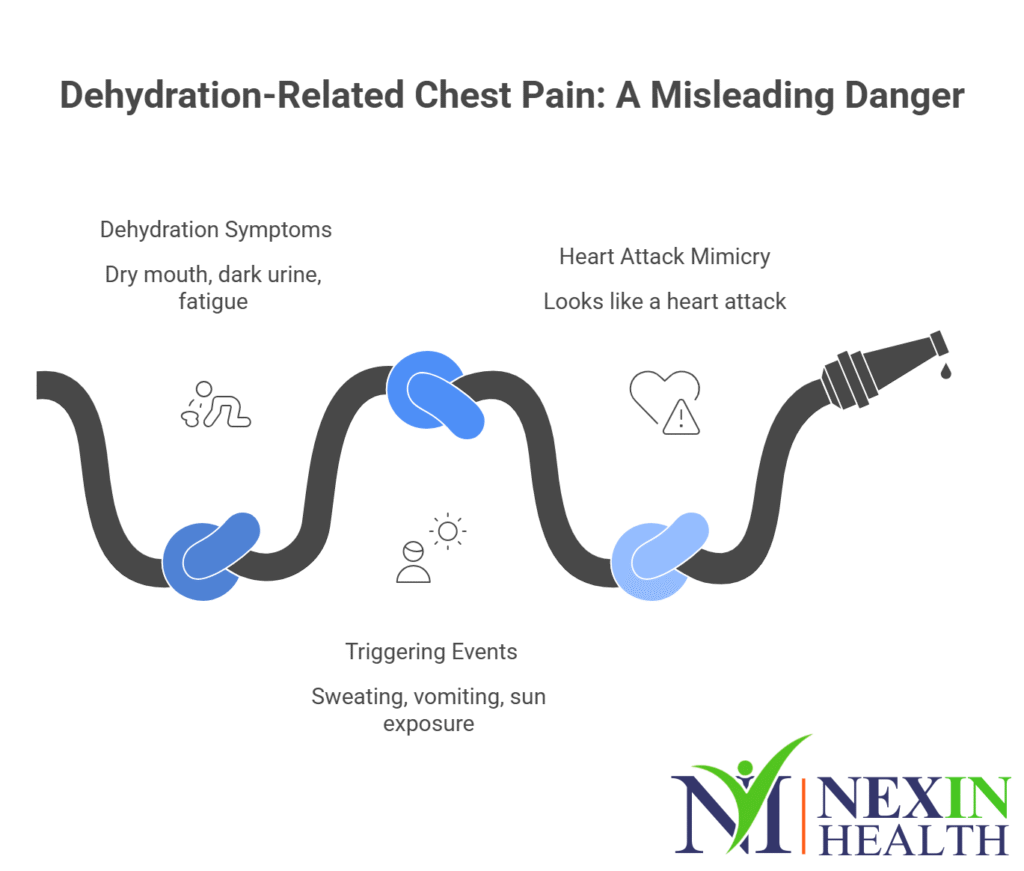
It is important to distinguish between “normal” chest pain and dehydration symptoms chest pain. When the body lacks fluids, you might feel a sharp, stabbing sensation or a dull ache. This is often accompanied by other signs like a dry mouth, dark yellow urine, and extreme fatigue.
If you experience low water intake chest discomfort, pay attention to when it happens. If it occurs after sweating, vomiting, or being in the sun, dehydration is a likely culprit. However, because can dehydration trigger chest pain or angina in ways that look like a heart attack, you should never ignore these signs.
Dehydration Risk for Heart Patients and Diabetics
There is a significant dehydration risk for heart patients compared to the general public. People taking diuretics (water pills) for blood pressure are at a higher risk because these medicines intentionally flush water out of the body.
Similarly, for those with diabetes, high glucose levels act as a diuretic. This leads to chronic low water intake chest discomfort. If you have a metabolic disorder, your “thirst mechanism” might be broken, meaning your heart is under stress long before you feel the need to drink. This explains does dehydration trigger angina more frequently in older adults and chronic disease patients.
Heart Attack due to Dehydration
In extreme temperatures, a Heart Attack due to Dehydration becomes a silent but serious threat. When the body loses excessive fluids, the blood volume decreases, causing the blood to become thicker and more viscous. This thickening increases the strain on the cardiovascular system, potentially triggering a Heart Attack due to Dehydration in vulnerable individuals. Clinical data suggests that electrolyte imbalances caused by fluid loss can lead to arrhythmias, further heightening the risk of a Heart Attack due to Dehydration. Maintaining optimal fluid intake is the most effective way to prevent a Heart Attack due to Dehydration during the peak summer months.
The Science of Dehydration and Thick Blood
One of the most technical aspects of this topic is dehydration and thick blood. In medical terms, this is high blood viscosity. Thicker blood creates more friction against the artery walls. This friction can damage the delicate lining of the blood vessels, leading to inflammation.
Recent clinical trials suggest that high blood viscosity is a major “silent” risk factor for heart attacks. When we discuss can dehydration trigger chest pain or angina, we are really discussing the heart’s inability to overcome this friction. Without enough water, the heart muscle (myocardium) has to use more oxygen to do the same amount of work, leading to ischemia (lack of oxygen) and pain.
Dehydration and Heart Palpitations: When the Rhythm Breaks
Many people notice dehydration and heart palpitations before they feel actual chest pain. Palpitations feel like your heart is skipping a beat, fluttering, or thumping too hard. This happens because dehydration causes an imbalance in electrolytes like potassium, sodium, and magnesium.
These minerals carry the electrical signals that tell your heart when to beat. When you are dehydrated, the concentration of these minerals becomes unstable. This leads to an irritable heart muscle. If you are wondering can dehydration trigger chest pain or angina, the answer is often “yes,” and it usually starts with these irregular rhythms that eventually lead to chest tightness.
Dehydration in Summer Heart Risk: A Seasonal Danger
The dehydration in summer heart risk is a major concern for emergency rooms. In hot weather, the body tries to cool down by sending more blood to the skin to sweat. This takes blood away from the internal organs, including the heart.
If you are not replenishing fluids, your blood volume drops while your heart rate increases to keep you cool. This “double whammy” is why chest pain due to dehydration is so common in July and August. For heart patients, even 30 minutes in extreme heat without water can trigger a stable angina episode into an unstable, dangerous situation.
Comparison Table: Treatment Approaches for Chest Discomfort
| Feature | Conventional Cardiac Care | Integrated Non-Invasive Approach | Dehydration-Specific Care |
| Primary Goal | Open blocked arteries (Surgery/Stents) | Improve blood flow naturally | Restore blood volume & electrolytes |
| Method | Invasive Surgery/Medication | Lifestyle + Non-Invasive Tech | Oral/IV Rehydration |
| Risk Level | High (due to surgery) | Very Low | Minimal |
| Focus Area | Specific blockages | Whole body & Heart-Spine health | Fluid balance |
| Long-term Result | Symptom management | Root cause reversal | Immediate relief of strain |
Does Dehydration Trigger Angina in Healthy People?
While it is more common in the sick, does dehydration trigger angina even in athletes? Yes. It is often called “pseudo-angina.” Intense exercise without proper hydration leads to a buildup of lactic acid and a decrease in blood pH.
This metabolic shift can cause the coronary arteries to spasm. This is why even a fit person might ask, can dehydration trigger chest pain or angina? The medical explanation is that the demand for oxygen simply exceeds the supply because the blood is too sluggish to carry it fast enough.
How Dehydration and Blood Pressure Changes Impact You
We often hear about high blood pressure, but dehydration and blood pressure changes usually involve a drop in pressure called “orthostatic hypotension.” This is that dizzy feeling you get when you stand up quickly.
When your blood pressure is too low because of dehydration, the heart does not get “primed” with enough blood between beats. To compensate, the heart beats faster and harder. This constant “overdrive” mode is a direct answer to can dehydration trigger chest pain or angina. The heart eventually tires out, leading to the squeezing sensation known as angina pectoris.
Statistics of Can Dehydration Trigger Chest Pain or Angina
According to a Harvard Study, nearly 30% of elderly patients admitted for “chest pain” were found to be suffering from clinical dehydration rather than a new blockage. Furthermore, research shows that maintaining optimal hydration can reduce the risk of fatal heart disease by nearly 45% in men and 41% in women. These statistics of can dehydration trigger chest pain or angina highlight that water is just as important as any heart medication.
How Can Dehydration Trigger Chest Pain or Angina Works: The Step-by-Step
-
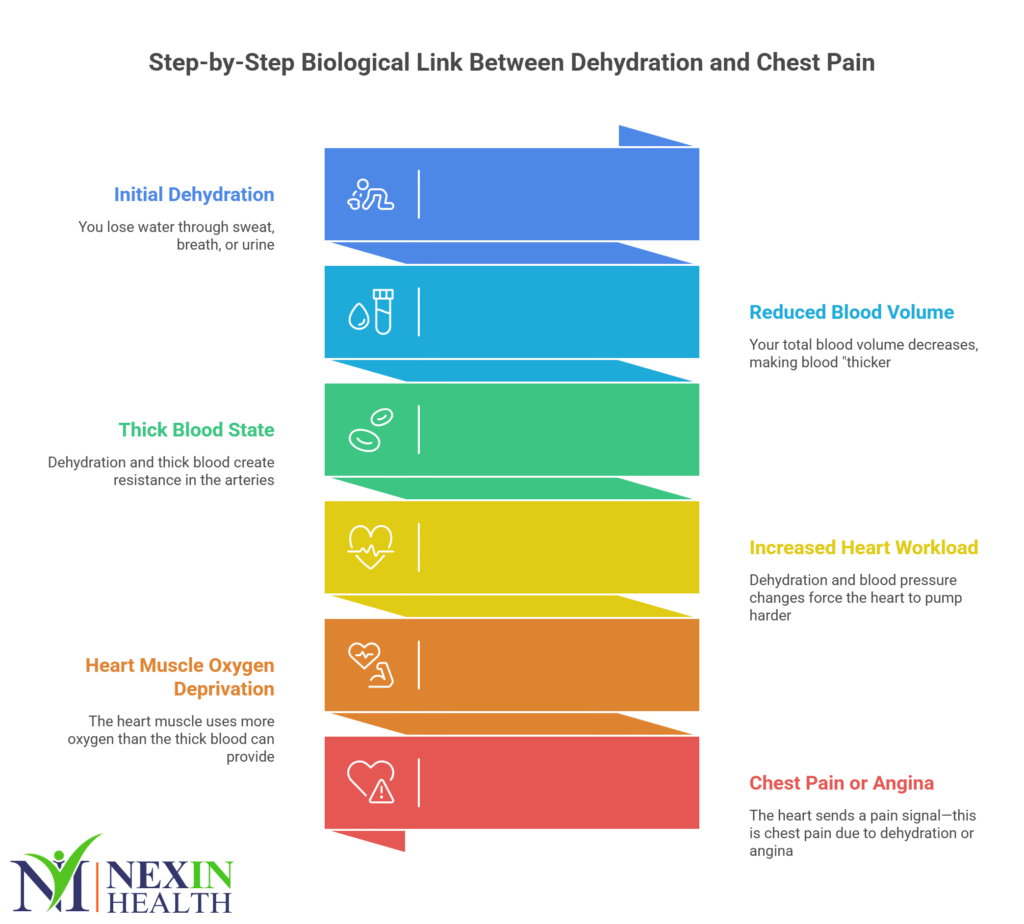
Water Loss: You lose water through sweat, breath, or urine.
-
Volume Drop: Your total blood volume decreases, making blood “thicker.”
-
Viscosity Increase: This dehydration and thick blood state creates resistance in the arteries.
-
Pressure Shift: Dehydration and blood pressure changes force the heart to pump harder.
-
Oxygen Debt: The heart muscle uses more oxygen than the thick blood can provide.
-
Pain Signal: The heart sends a pain signal—this is chest pain due to dehydration or angina.
Conventional Approach [Can Dehydration Trigger Chest Pain or Angina]
The conventional approach [can dehydration trigger chest pain or angina] usually involves doctors ruling out a heart attack first. They will use an EKG (Electrocardiogram) to check the heart’s rhythm. If they find that the heart is healthy but the patient is dehydrated, they will administer “Normal Saline” through an IV.
However, many doctors fail to explain to the patient that their low water intake chest discomfort is a warning sign. It means the heart’s “reserve” is low. If you are asking can dehydration trigger chest pain or angina, you should also be asking how to strengthen your heart so it isn’t so sensitive to fluid changes.
Benefits of Can Dehydration Trigger Chest Pain or Angina Knowledge
The benefits of can dehydration trigger chest pain or angina awareness are life-saving. By knowing that your pain might be fluid-related, you can:
-
Avoid unnecessary and expensive emergency room visits for mild dehydration.
-
Identify the need for dehydration and heart palpitations management early.
-
Prevent the “thick blood” state that leads to strokes and clots.
-
Improve your overall dehydration and heart health by drinking water before you feel thirsty.
Why NexIn Health is Your Partner in Heart Wellness
When it comes to complex issues like heart and spine health, you need experts who look beyond the surface. NexIn Health is a leader in heart and spine treatment using non-invasive, integrated techniques. With over 14 years of experience and having consulted more than 30,000 patients, NexIn Health focuses on healing without the need for risky surgeries. Whether you are dealing with chronic angina or metabolic disorders, their advanced technology helps restore your health naturally.
-
Phone & WhatsApp: +91 9310145010
-
Website: www.nexinhealth.in
-
Email: care@nxinhealth.in
Read More: Fatty Liver and Non – Cardiac Chest Pain
Frequently Asked Questions (FAQs)
Que: Can dehydration trigger chest pain or angina?
Ans: Yes, dehydration reduces blood volume, making the heart work harder and potentially causing chest pain or angina.
Que: What does chest pain due to dehydration feel like?
Ans: It often feels like a tight squeezing, pressure, or a sharp dull ache, similar to traditional angina.
Que: Does dehydration trigger angina in people without heart disease?
Ans: Yes, it can cause “pseudo-angina” or coronary spasms even in healthy individuals due to thick blood.
Que: How much water should I drink to avoid heart strain?
Ans: Most people need about 8–10 glasses a day, but heart patients should follow their doctor’s specific fluid volume advice.
Que: Can low water intake chest discomfort cause a heart attack?
Ans: While dehydration itself isn’t a heart attack, the stress it puts on the heart can trigger one in high-risk individuals.
Que: Is dark urine a sign that my chest pain is from dehydration?
Ans: Yes, dark, concentrated urine is a primary sign that your body lacks the fluids necessary for healthy heart function.
Que: Why does my heart race when I am dehydrated?
Ans: Your heart beats faster (palpitations) to compensate for the lower amount of blood circulating in your body.
Que: Can coffee cause dehydration and heart palpitations?
Ans: Yes, caffeine is a diuretic. Too much of it can lead to fluid loss and trigger a racing heart.
Que: How fast does chest pain go away after drinking water?
Ans: If it is purely from dehydration, you may feel better within 30–60 minutes of rehydrating, but always seek medical advice.
Que: Are salt drinks better than water for chest pain?
Ans: Electrolyte drinks are better if you have been sweating heavily, as they help with dehydration and heart palpitations.
Que: Can dehydration and thick blood cause blood clots?
Ans: Yes, slower-moving, thicker blood is much more likely to form dangerous clots in the legs or heart.
Que: Does dehydration in summer heart risk affect everyone?
Ans: Yes, but the elderly and those on blood pressure medication are at the highest risk.
Que: What is the “Fact Sheet” about dehydration and the heart?
Ans: Dehydration can make blood 8% thicker and increase the resting heart rate by 15 beats per minute.
Que: Should I see a doctor for occasional chest discomfort?
Ans: Yes. Even if you think it is just dehydration, any chest pain should be evaluated to rule out serious blockages.
Que: an NexIn Health help with heart-related chest pain?
Ans: Yes, NexIn Health specializes in non-invasive techniques to improve circulation and heart health without surgery.
Que: How exactly does dehydration lead to a heart attack?
Ans: Dehydration causes your blood vessels to constrict and your blood to thicken. This forced pressure makes the heart pump much harder and faster to circulate oxygen. For patients with existing heart conditions or metabolic disorders, this excessive cardiac stress can lead to a blockage or heart failure.
Que: What are the specific red flags for heart patients during heatwaves?
Ans: Key red flags include sudden palpitations (racing heart), extreme lightheadedness, decreased urine output, and a feeling of heavy chest pressure. If you experience these, move to a cool environment immediately, sip electrolyte-rich water, and seek medical advice from experts like NexIn Health.
Conclusion and Next Steps
We have explored the deep question: can dehydration trigger chest pain or angina? The medical evidence is clear—water is the fuel for your circulatory system. Without it, your heart is forced to pump a thicker, more resistant fluid, leading to the painful symptoms of angina. By focusing on dehydration and heart health, you can significantly reduce your risk of emergency complications.